CPSC publishes searchable recall notices with identifying product details
A practical evidence register for connected fitness equipment recalls that separates product matching, owner decisions, member notices, and closure proof.
Identity evidence should be resolved to one individual before enrollment
A research-based method for reviewing duplicate fitness member profiles without merging identities, payments, consents, or attendance on weak evidence.
Emergency plans should define how employees report emergencies
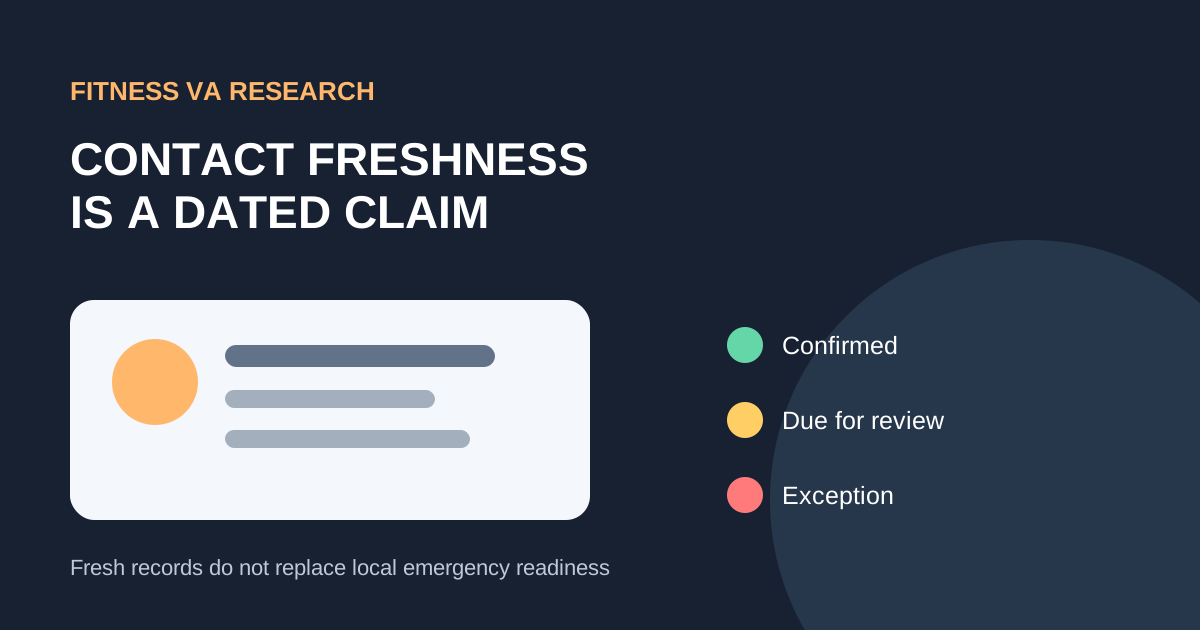
An evidence-led audit for fitness emergency contact records that measures administrative freshness without treating a populated field as emergency readiness.
Commercial email must include a clear opt-out mechanism
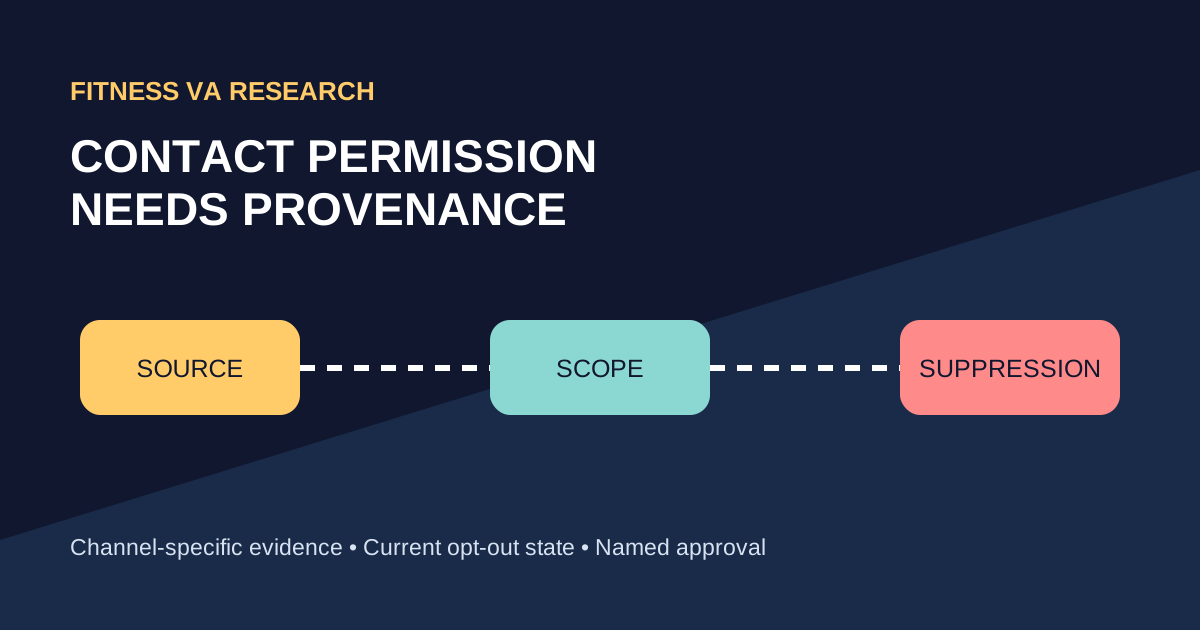
A practical method for recording fitness lead contact permission, channel, source, and opt-out state without turning a CRM checkbox into legal certainty.
Keep business records for as long as they may be needed
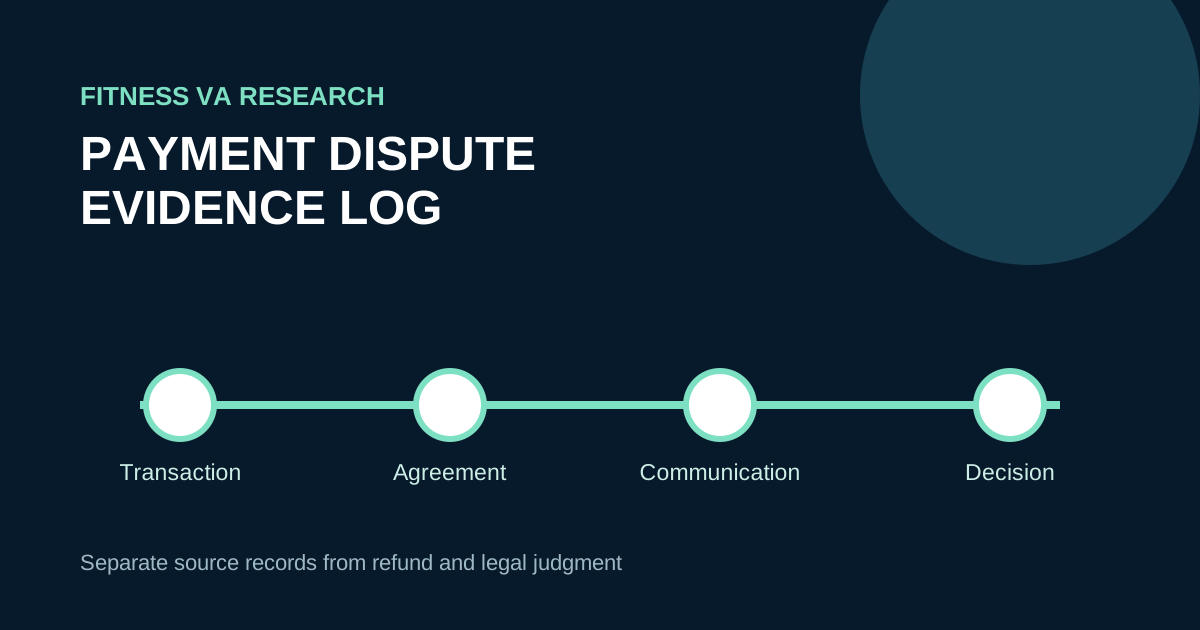
An evidence-led method for organizing fitness membership payment disputes without letting an administrative log decide legal rights or refund outcomes.
Access rights should be reviewed and removed when no longer required
A decision-grade register for removing fitness-platform access after role changes without confusing a completed checklist with proof of system security.
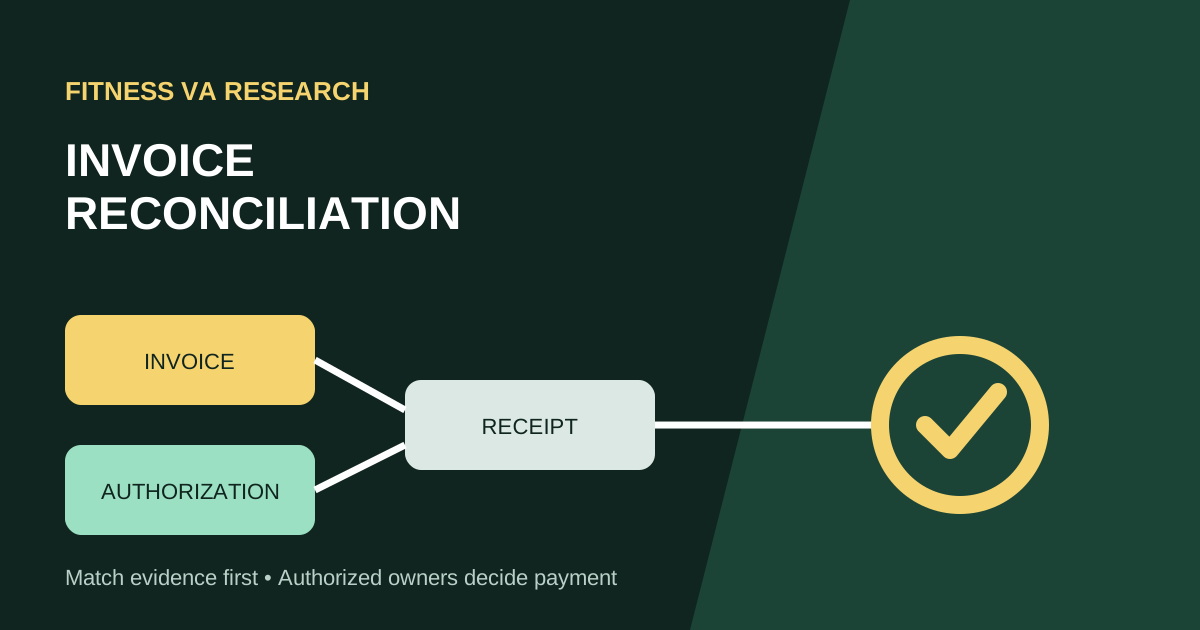
Supporting documents show the items recorded in business books
A practical evidence model for reconciling fitness vendor invoices without allowing an administrative match to authorize payment or certify accounting accuracy.
The ADA applies to businesses open to the public, including their web content
Build an accessibility issue queue for a fitness website that preserves user reports, test evidence, ownership, and verification without dismissing barriers.
Employers usually prefer certification for fitness trainers and instructors
Track trainer certification and credential expiry evidence without inventing requirements, declaring competence, or confusing a document with authorization to work.

 Equipment operations